Annual Cyber Threat Report 2025-26
The 2025-26 Annual Cyber Threat Report highlights key threats, responses and security advice for Australians.

What malicious actors are targeting
Everyone can be a target
Cyber threats affect Australians of all ages, industries and communities. Criminals are increasingly combining cyber techniques with social engineering to scam, defraud and exploit individuals at scale.
Who is being impacted?
Highest reporting age groups
- 25-34 and 35-44 year olds accounted for 42% of all scam reports to ReportCyber.
Youth reporting increased
- Reports from victims aged 17 and under increased 15%.
- 48% of reports related to cyber abuse.
Older Australians
- Reporting from Australians aged 65 and over decreased by 17%.
- 51% of reports accounted for online fraud activity.
Cybercrime in Australia 2025 report
Australian Cybercrime Survey 2025
- 64% experienced cybercrime at some point in their life.
- 45% were victims in the previous 12 months.
Most common cybercrimes
- 21% malware
- 21% identity crime and misues
- 11% fraud and scams
Why Australians remain vulnerable
Research conducted as part of the Australian Government's Act Now, Stay Secure. campaign found:
- 57% do not review privacy or location settings.
- 64% have personally identifiable information visible on social media.
Password habits create risk
- 55% reuse password across multiple accounts
- 59% use variations of the same password
- 30% include personal information in passwords
These behaviours make credential theft and account compromise easier for cybercriminals.
Four simple ways to be a harder target
- Review privacy settings
- Enable multi-factor authentication (MFA)
- Use unique passwords or passkeys for every account
- Think carefully before sharing personal information online
Cybercriminals increasingly exploit personal information and human trust. Simple cyber security practices can significantly reduce an individuals risk of becoming a victim.
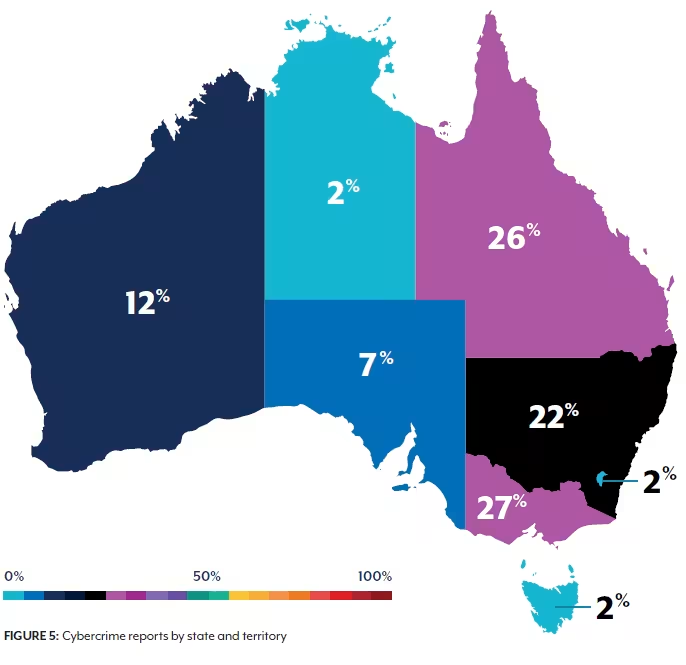
Australia’s more populous states – Victoria, Queensland and New South Wales – continue to report more cybercrime than any other state or territory, with disproportionately higher reporting rates relative to their populations.
- Western Australia: 12%
- Northern Territory: 2%
- South Australia: 7%
- Queensland: 26%
- New South Wales: 22%
- Australian Capital Territory: 2%
- Victoria: 27%
- Tasmania: 2%