Five Eyes cyber security agencies statement


As the leaders of the Five Eyes cyber security agencies, we are united in our call to action: the evolving landscape of artificial intelligence (AI) is rapidly transforming cyber risk, and we must act swiftly to remain ahead.
A call to action
While Al will help us improve cyber defence over time, it also accelerates the speed, scale, and sophistication of cyber threats.
Frontier Al models are anticipated to exceed current industry expectations, fundamentally transforming both offensive and defensive cyber capabilities. The timeline is not years, it is months.
In this environment, cyber resilience is integral to advancing business continuity, market confidence, and long-term value. We urge leaders to:
- understand and assess risk, readiness and accountability
- prioritize foundational cyber security practices and controls
- empower cyber leaders with authority and resources
- stay actively engaged as threats and guidance evolve
Success will come from getting the basics right, acting quickly, and integrating cyber security into core business strategy. Those that do not will face growing operational and strategic disadvantage.
The urgency is clear
AI is not a future consideration – it is already here.
It lowers barriers for malicious actors and increases the speed and complexity of attacks, shrinking the window between vulnerability discovery and exploitation ever more quickly. At the same time, AI offers powerful tools to strengthen defence.
A whole-of-organization and whole-of-society response is required
Cyber risk can no longer be treated as a purely technical issue. This is a core business risk and leadership responsibility. Boards and executives should ensure cyber resilience is in place and works under pressure. It is not enough to have controls. Leaders must be confident those controls will perform during a real incident. This requires reassessing long-standing trade-offs and using AI deliberately to strengthen defence – not just improve efficiency.
Key Actions for Leaders
Core principles:
- Secure-by-design and secure-by-default must become standard practice – not an aspiration.
- Resilience cannot depend on a single solution or technology. Defence in depth remains essential.
- As AI systems evolve, new and previously unknown vulnerabilities will emerge, including zero‑day vulnerabilities.
Breaches will occur. Preparedness helps you contain them quickly and prevent escalation into major operational and financial crises.
Practical actions
These actions are not new, but are now urgent to reduce not only technical risk, but also operational, financial and reputational exposure:
- Reduce your attack surface: Limit unnecessary system access and external connectivity. Challenge whether systems need to be exposed at all and isolate those that do not.
- Accelerate patching processes: AI is shortening the time between vulnerability discovery and exploitation. Delays in patching increase risk, especially for operational systems with long update cycles. Prioritise security updates accordingly to manage risks.
- Address legacy systems: Unsupported systems are easy targets. They are not just technical debt, they are strategic liabilities.
- Review and strengthen identity and access controls: Limit who can access critical systems. Enforce strong authentication and regularly review permissions.
- Prepare for incidents before they happen: Test response plans, train and prepare teams, and assume breaches will occur. Focus on fast containment and recovery.
Use AI to strengthen defence
Adversaries are already using AI to move faster and more effectively. Defenders must do the same.
Organizations that integrate AI tools into their security operations can detect vulnerabilities earlier, improve software quality, monitor unusual behaviour, and respond faster to incidents – reducing both the cost and impact of incidents.
Success will not come from having the most tools. It will come from getting the basics right, acting quickly, and integrating cyber security into core business strategy.
We must act now
The rapid pace of frontier AI development means cyber risk assumptions can become outdated in months, not years. We must act before and be prepared to adapt and withstand evolving threats.
Cyber resilience is not an IT issue - it is central to operational continuity and market trust. Leaders who act now will reduce exposure, strengthen resilience, and build confidence with customers, partners, and investors. Those who delay will face growing and avoidable risk.
Our Five Eyes cyber security partnership is deep and transparent. The way we share cyber threat information is critical to our collective security. In that spirit, we call on leaders across industry – including vendors – to act now and work together to protect our people and secure our future.
Stephanie Crowe – Head Australian Cyber Security Centre
Australian Signals DirectorateRajiv Gupta – Head Canadian Centre for Cyber Security
Communications Security EstablishmentCatriona Robinson – Head of the National Cyber Security Centre
Government Communications Security BureauRichard Horne – CEO, National Cyber Security Centre
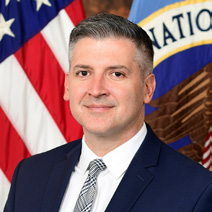
Government Communications HeadquartersDavid Imbordino – Director Cyber Security Directorate
National Security AgencyNick Andersen – Acting Director
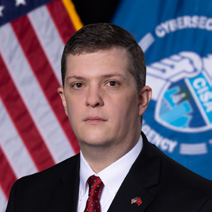
Cybersecurity and Infrastructure Security Agency